Central Coast Tree Services — qualified local arborist referrals Call 0485 835 759

Central Coast Tree Services — Tree Removal, Lopping & Stump Grinding

Central Coast Tree Services connects you with qualified, insured local arborists. Tree removal, lopping and stump grinding, from Gosford to Wyong and out to the bush blocks. That includes the steep, tight sites where a tree has to be taken down in pieces rather than felled. Tell us what you need and you will get a fixed quote.

  • Free call, no obligation
  • Qualified and insured operators only
  • Regular maintenance or one-off jobs
  • Servicing all of the Central Coast

Talk it through

No obligation. Takes 30 seconds.

No obligation. We pass your details to a qualified local arborist who covers your suburb.

Why use Central Coast Tree Services

Local arborists who know this coast, its soil and its weather.

Arborists who work this coast, not a national call centre

Your job goes to someone who actually works between Woy Woy and Budgewoi. They know what a sandy Umina block does under a week of easterly rain. They know why the Terrigal escarpment jobs need a crane rather than a bigger chainsaw.

Qualified and insured, because council effectively requires it

Central Coast Council expects an AQF3 trade or AQF5 consulting arborist to sign off tree works — including the paperwork for work that's exempt. We only refer people who hold those qualifications and carry public liability cover.

Straight answers about council before you book

Most quotes don't mention that a dead tree with hollows is still protected. We'd rather tell you that up front than have you find out afterwards.

Tree services in the Central Coast, NSW

The jobs that come up most. Pick what's closest to your situation — or just tell us what's happening and we'll work it out.

See all 19 services

How a tree actually comes down

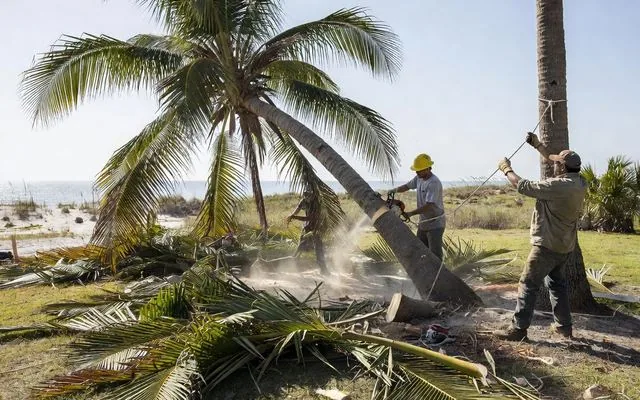
Almost nobody fells a tree on the Central Coast. Between the housing density, the slopes and the bush blocks, most removals are dismantles — and that is what you are really paying for. The governing Standard is AS 4373 Pruning of amenity trees.

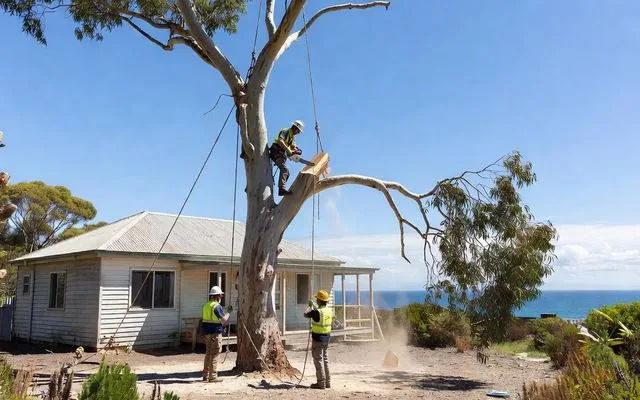
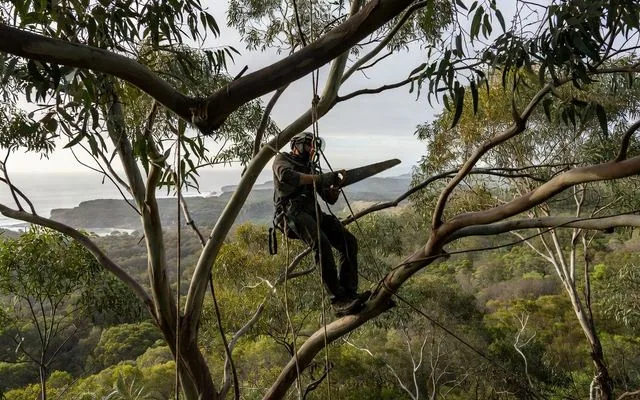
Climbed and rigged, piece by piece

A climber ascends, and each section is cut and lowered on ropes rather than dropped. On a steep block with a deck below and a neighbour's roof three metres away, that is the only safe way down.

It is slow and it is skilled, and it is why two quotes for the same-looking tree can differ by thousands. The cutting is the easy part; controlling where 200 kilograms of spotted gum goes is not.

When a crane is cheaper than climbing

A crane lifts whole sections out in one movement instead of lowering them individually. It costs more per hour and often less overall — a removal that takes a climbing crew two or three days can be a single morning.

It only works where a crane can legally set up and reach. On a narrow coastal street or a bush block with no hardstand, it is not an option however much sense it would otherwise make.

The qualification that decides who can sign what

AQF Level 3 — Certificate III in Arboriculture — is the practising arborist: climbing, pruning, removal. AQF Level 5 (Diploma) is the consulting arborist, and it is a different job entirely.

Only a Level 5 can write the report a council, court or insurer will accept. Say Central Coast Council has asked for an arborist report to support an application. A Level 3 crew cannot produce it, however good they are at removals. Ask which level is signing before you pay.

Cuts are placed where the tree can seal them

AS 4373 is built on CODIT — a tree walls decay off rather than healing it. So a cut just outside the branch collar can be sealed over; a flush cut or a stub cannot, and stays open to fungal decay.

That is the real difference between pruning and what people call lopping. This site uses lopping because it is the word people search. But the stubs it describes produce weakly attached regrowth — which is why a heavily lopped tree is often more hazardous five years on.

Roots need advice before a machine goes near them

AS 4373 calls for at least AQF Level 4 advice before root pruning, because cutting roots affects stability and not just health.

On the Coast this comes up constantly with pools, driveways and additions on sloping sandy blocks. A trench through the root plate can leave a tree that looks perfectly healthy and comes over in the first serious southerly.

The Central Coast's storm risk is different — and so is the tree damage

This is not a sales line. Coastal NSW takes a particular kind of hammering, and it fails trees in a particular way. Sodden sand. Sustained onshore wind. Root plates that lift out of the ground, instead of trunks that snap.

East coast lows

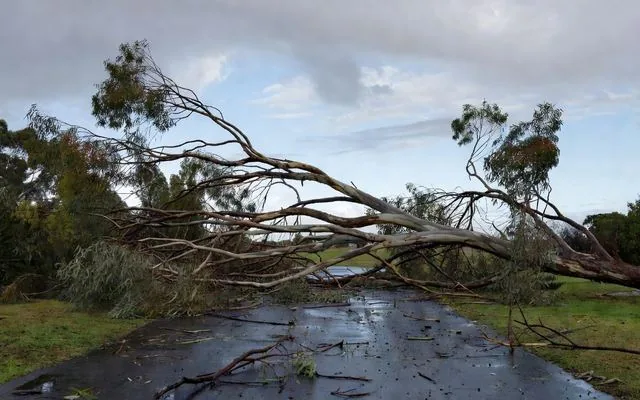
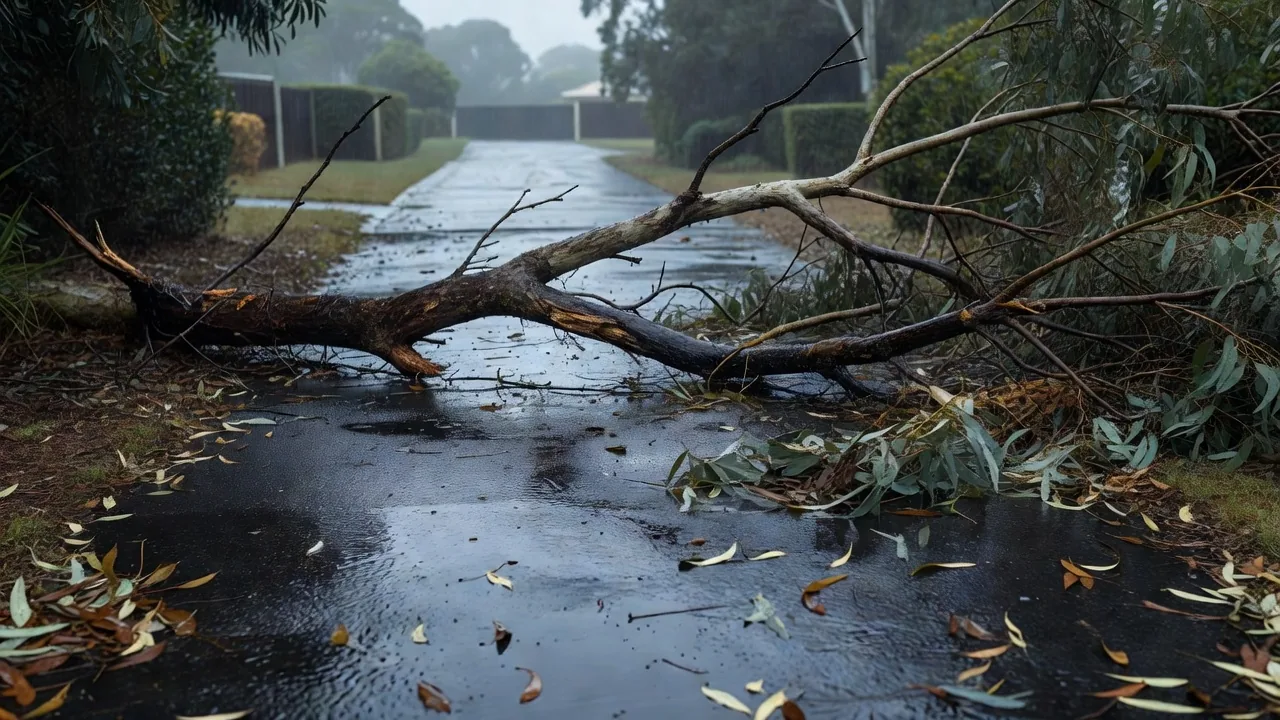
The Central Coast's defining storm risk. A deep low parks off the coast and drives days of onshore gales and saturating rain. Sodden sandy soil plus a sustained easterly is the classic windthrow combination — trees don't snap, the root plate lifts and the whole tree goes over.

Southerly busters

A hot northerly swings hard to the south in minutes, often with a 40-60km/h jump in wind speed and no warning to speak of. Limbs that have been growing into a prevailing northerly for years get loaded from exactly the wrong side.

Summer storm season

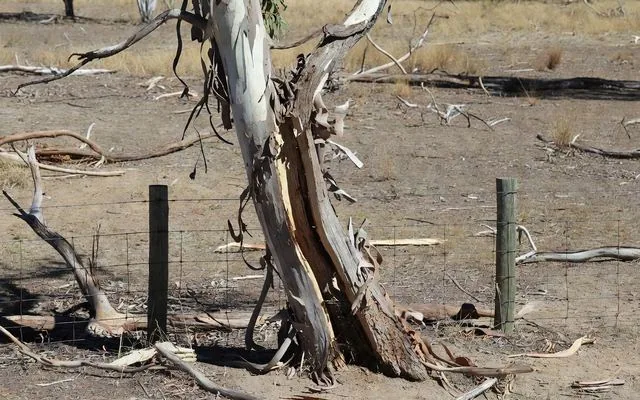
November through February brings short, violent afternoon cells off the escarpment — hail, downbursts and lightning strikes on tall eucalypts. Damage tends to be single-tree and severe rather than widespread.

A large well-maintained shade tree with a full even canopy on a manicured park lawn

Most tree work here is better done on a schedule than in a hurry. A canopy kept in reasonable order is cheaper to maintain. It is safer in a blow. And it is far less likely to become an emergency callout.

What does tree work cost in the Central Coast?

Most removals land between $700 and $2,000, with small trees from around $250 and stump grinding from $150. Access matters more than height — a big tree the truck can reach is cheaper than a small one it can't.

See the full price guide

How long does tree removal take?

Access decides almost everything here. The same tree on a flat Bateau Bay block and a steep Kincumber hillside are not the same job.

Small tree, truck to the trunk1–3 hoursChipper alongside, debris straight in.
Medium tree, rigged downHalf a dayClimbed and lowered in sections past a fence, deck or pool.
Large gum, steep or tight blockA full day or moreEvery piece controlled. Typically a three-person crew.
Crane-assistedOften a morningWhole sections lifted out. Needs street access and a legal set-up point.
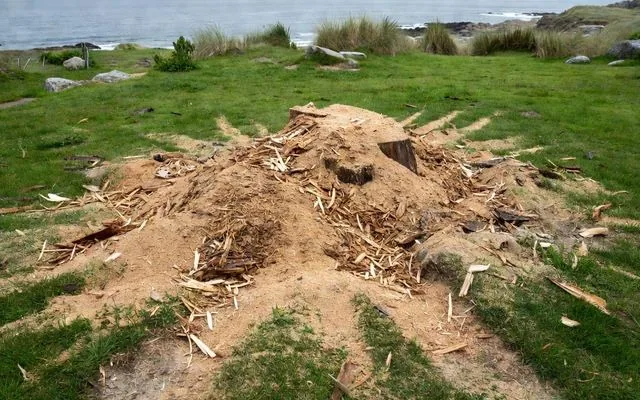
Stump grinding30–90 minutesSeparate machine, often a separate visit. Check it is in the quote.
Storm calloutMade safe same day where a crew is freeMaking safe and full clearing are two visits after a big east coast low.

What makes a job take longer

A duration quoted over the phone without seeing the block is a guess. On the Coast the site inspection is what makes the number real.

Before you remove a tree, check the rules

On the Central Coast, trees are protected unless the work falls inside a listed exemption. The two exemptions that cover most household jobs are narrower than people expect. Check before anything comes down.

Approval is required for:

  • any tree works that don't fall inside one of council's listed exemptions
  • anything involving a threatened species, or a tree that's habitat for threatened fauna
  • trees forming part of an endangered ecological community
  • heritage items, Aboriginal objects or places, and trees inside a heritage conservation area

Approval is not required for:

  • pruning up to 10% of the tree's foliage in a growing season, to AS4373-2007, on branches no thicker than 50mm
  • removing a genuinely dead tree, or taking dead branches out of a living canopy

Removing a protected tree without approval can attract significant penalties under NSW planning law, and council can require replacement planting on top. Worth a phone call to 02 4306 7900 before anything comes down — the answer is free and the fine isn't. Source: Central Coast Council. The rules turn on your individual tree, so confirm yours.

Full permit rules explained

Areas we cover near the Central Coast

From Woy Woy and the Peninsula up through Gosford and Erina to Wyong, Toukley and Budgewoi, plus the hinterland at Kulnura, Somersby and Mangrove Mountain. Travel can affect the quote on the far edges.

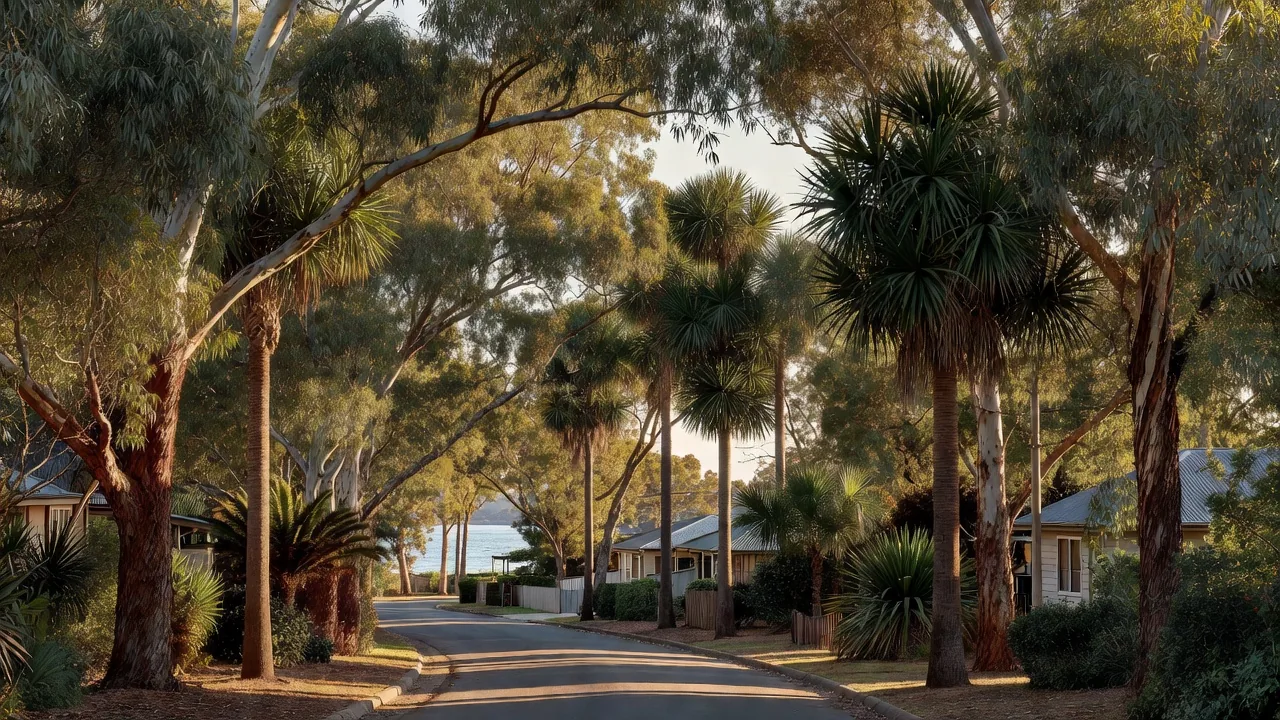
A wide regional street lined with large mature eucalyptus trees and suburban homes
GosfordTerrigalErinaWoy WoyUmina BeachEttalong BeachKincumberAvoca BeachWamberalBateau BayThe EntranceLong JettyWyongTuggerahBerkeley ValeKillarney ValeToukleyBudgewoiCopacabanaSaratogaGreen PointEast GosfordPoint ClareNararaNiagara ParkLisarowOurimbahEmpire BayDavistownBensvilleSomersbyKulnuraMangrove MountainPeats RidgeYarramalongWyong CreekNorah HeadHardys BayPatongaPearl BeachKariong

Tree service FAQs

What does tree removal cost on the Central Coast?

A small tree under 10m is usually $500 to $1,200. A medium tree of 10 to 20m is $1,200 to $2,800, and that is the standard suburban job. A large tree over 20m runs $2,800 to $8,000 and up. Access changes the price more than height does. A tree a truck can park beside is far cheaper than the same tree behind a house.

Why does access change the price so much?

If the crew can drop timber straight into a chipper beside the truck, the job is quick. Now say every piece has to be roped down over a roof, carried through a side gate, and out to the street. The same tree can take three times as long. That is labour, and labour is most of the bill.

Do I need council approval to remove a tree on the Central Coast?

Usually yes. Central Coast Council protects trees unless the job falls inside a listed exemption under Chapter 3.5 of the DCP 2022. That is the opposite of councils that use a simple height limit. The two exemptions that cover most household jobs are light pruning and genuinely dead trees.

My neighbour's tree hangs over my fence. What can I do?

At common law you may prune branches back to the boundary line, and no further. You cannot enter their yard, and council rules still apply to the tree. If the tree is damaging your property, or is a risk to someone, you have another route. The NSW Trees (Disputes Between Neighbours) Act 2006 lets you apply to the Land and Environment Court. The Court expects you to try talking to your neighbour first.

Who pays if a neighbour's tree falls on my house?

It depends on whether the owner knew the tree was dangerous. A healthy tree brought down by a storm is usually treated as an act of nature, and each owner claims on their own insurance. A tree that was visibly dead or that the owner had been warned about is a different matter. A written arborist report is what turns an opinion into evidence.

The tree is dead. Can I just take it out?

A genuinely dead tree is one of the listed exemptions, so usually yes. The catch is proving it was dead. Photograph it before the work starts. If there is any doubt, an arborist report costs $400 to $700 and settles the question before council can ask it.

What is an arborist, and what does AQF Level 5 mean?

An arborist is trained in tree health and tree safety, not just cutting. The qualification levels run from AQF Level 3, which covers the climbing and cutting work, up to AQF Level 5, which covers assessment and reporting. Council will normally only accept a report from a Level 5 arborist.

How do I know if my tree is dangerous?

Look for a few specific things. Mushrooms or bracket fungus at the base. A crack or a split in the trunk. Bare branches with no leaves in the growing season. New soil heaving up on one side of the base. A lean that has changed. Any one of those is worth an inspection. Several together is urgent.

Do you take the stump out as well?

Not automatically. Removal and stump grinding are separate jobs and separate prices. Stump grinding runs $150 to $500 depending on the diameter and the access, with a minimum callout of roughly $180 to $220. Ask for it in the same quote, because bringing a grinder back later costs more than doing it on the day.

What happens to the wood and the branches?

Branches go through a chipper on site. Most companies take the chip away, and many will leave you the mulch if you ask. Trunk wood is usually cut into rounds. Say what you want before the work starts. Firewood left in the yard is a favour, not the default.

How long does the job take?

A small tree with clear access is a morning. A medium suburban tree is most of a day. A large tree that has to come down in sections can take two days or more, and may need a crane. Storm make-safe work is different again, because the point is to make it safe first and tidy it up afterwards.

What about branches near the power lines?

Do not touch them, and do not let an unqualified person touch them. Work near live powerlines needs specific accreditation. Ausgrid maintains the lines from the street to the connection point. From that point to your house it is the property owner's responsibility, and it still needs someone accredited to do it.

When is the best time of year to prune?

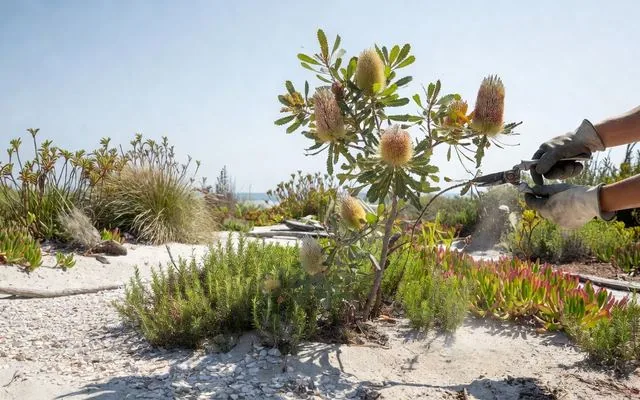
Late winter and early spring suit most trees, because the tree grows back over the warm months. Safety work is the exception. If a limb is over the roof or hanging, it does not wait for a season. On this coast most people book pruning before summer storms, not after.

Will taking the tree out damage my house or my pipes?

Removing a tree does not usually damage anything. It is the stump grinding and the root work that need care near pipes, paving and footings. Say where your services run before the work starts. On reactive clay soils, taking out a large tree can also change how the ground holds water near the footings, which is worth asking about.

Should I check that they are insured?

Yes, and ask to see it rather than take a word for it. Tree work drops heavy things near houses and people. Ask for public liability cover, and ask whether the people climbing are covered as well. A legitimate operator will send it through without being chased.

Can you help after a storm?

Yes. Storm work is priced differently, because it is make-safe first. Get the weight off the roof or the car. Clear the site properly once it is stable. Emergency and after-hours callouts run $500 to $3,000 and up, depending on what the limb is resting on. If a line is down or the house is unsafe, ring emergency services before you ring anyone else.
Get a fixed quote from a local Central Coast arborist

Tell us the suburb and what the tree needs. We'll do the rest.

Call 0485 835 759